What is Corneal Crosslinking? Collagen is a crucial protein found throughout our bodies, providing strength and support to various tissues, including corneal tissue. However, for patients with keratoconus, the collagen fibers in the cornea weaken and become susceptible to deformation. The compromised corneal tissue eventually loses its symmetrical dome shape, bulging outwards and resulting in […]
Read More
Posted by Cornea and Laser Eye Institute on June 25, 2024
Understanding Keratoconus and the Need for Surgical Intervention Keratoconus is a progressive eye condition where the cornea, the clear front part of the eye, thins and bulges into a cone-like shape. This irregular shape can cause significant vision problems, including blurred and distorted vision, sensitivity to light and glare, and difficulty driving at night. While […]
Read More
Posted by Cornea and Laser Eye Institute on June 19, 2024
Corneal crosslinking (CXL) is a procedure designed to strengthen the cornea, the clear front part of your eye. It’s used to treat conditions like keratoconus and post refractive surgery corneal ectasia. Both are progressive eye diseases that can cause your cornea to thin and bulge. While CXL is a safe and effective procedure, it’s important […]
Read More
Posted by Cornea and Laser Eye Institute on June 18, 2024
Introduction to Keratoconus and the Need for Effective Treatments Keratoconus is a progressive eye condition that affects the shape and structure of the cornea, the clear dome-shaped front surface of the eye. This condition causes the cornea to thin and bulge, resulting in distorted vision. It typically begins during adolescence or early adulthood and can […]
Read More
Posted by Cornea and Laser Eye Institute on May 15, 2024
Keratoconus, a progressive eye condition characterized by the thinning and bulging of the cornea, presents a significant challenge in the field of ophthalmology. For individuals afflicted with this disorder, the distorted shape of the cornea can lead to visual impairment and a diminished quality of life. While traditional treatments such as glasses, specialty contact lenses, […]
Read More
Posted by Cornea and Laser Eye Institute on April 16, 2024
Corneal Tissue Addition Keratoplasty (CTAK) is a novel tissue addition technique that improves corneal curvature and vision for patients with keratoconus. Keratoconus is characterized by thinning of the cornea resulting in a steep cone shape and irregular astigmatism. In technical terms, CTAK is a form of lamellar keratoplasty where a customized sterilized corneal stromal inlay […]
Read More
Posted by Cornea and Laser Eye Institute on April 16, 2024
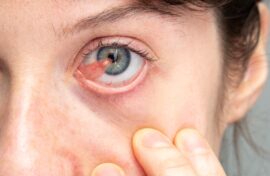
What is a pterygium? A pterygium is a common eye condition characterized by the growth of a fleshy tissue on the conjunctiva, the clear tissue that covers the white part of the eye. This abnormal growth usually starts from the inner corner of the eye and gradually extends toward the cornea. Pterygium is often referred […]
Read More
Posted by Cornea and Laser Eye Institute on January 16, 2024
Epi-off corneal collagen cross-linking (CXL) treatment treats progressive keratoconus and ectasia that develops after refractive surgery. The procedure received FDA approval in 2016. Dr. Greenstein and his colleagues conducted a study to determine how well the procedure faired over the years. The study concluded that the treatment appears to remain stable for the majority of […]
Read More
Posted by Cornea and Laser Eye Institute on October 11, 2021
The Cornea and Laser Eye Institute is proud to sponsor the NJ Regional Horse Trials that were held on June 2, 2018! Julia Hersh, who is a very active participant is volunteering at this event. We look forward to participating in more events in the future! Good luck everyone and more importantly, have fun! https://www.njregionponyclub.org/nj-regions-horse-trials—6-3-2018.html
Read More
Posted by Cornea and Laser Eye Institute on July 5, 2018
There are many scenarios where you may find yourself at risk for an eye injury. Whether you are playing a sport, handling chemicals, working with tools, or simply in an environment where foreign objects are present, the potential for eye injuries is significant. While eye injuries can be painful and concerning, the good news is […]
Read More
Posted by Cornea and Laser Eye Institute on October 26, 2017