
A Reversible Vision Correction Option for Patients with Moderate to High Nearsightedness
If you’re interested in reducing your dependence on glasses or contact lenses, EVO ICL may be worth exploring.
EVO ICL (Implantable Collamer Lens) is an advanced vision correction procedure that improves vision without removing corneal tissue. Instead, a specially designed lens is placed inside the eye to correct refractive errors while working alongside your natural lens.
For many patients with moderate to high nearsightedness, thin corneas, or dry eye concerns, EVO ICL can provide exceptional visual outcomes while preserving the natural structure of the cornea.
At CLEI, our experienced refractive surgeons offer a full range of vision correction options, including LASIK, PRK, and EVO ICL. The goal is not to recommend the same procedure for everyone, but to identify the treatment that best matches your eyes, lifestyle, and long-term visual goals.
If you are considering EVO ICL in New Jersey, our team can help determine whether this procedure may be right for you.
What Is EVO ICL?
EVO ICL stands for EVO Implantable Collamer Lens.
Unlike LASIK or PRK, which reshape the cornea using a laser, EVO ICL corrects vision by placing a thin, biocompatible lens inside the eye. The lens sits behind the iris and in front of the eye’s natural lens, where it helps focus light more precisely on the retina.
The lens is made from Collamer®, a proprietary material designed to work naturally with the eye.
One of the unique aspects of EVO ICL is that no corneal tissue is removed. Because of this, the procedure may be an excellent option for patients who are not ideal candidates for laser vision correction.
EVO ICL is FDA approved and has become an increasingly popular option for patients seeking long-term vision correction.
What Does EVO ICL Treat?
EVO ICL is primarily used to treat:
- Nearsightedness (myopia)
- Astigmatism
- Moderate to high refractive errors that may exceed LASIK treatment ranges
Many patients choose EVO ICL because they want freedom from glasses or contact lenses but have been told they are not good candidates for LASIK due to corneal thickness, prescription strength, or other factors.
During your consultation, your surgeon will evaluate your prescription, corneal measurements, eye health, and visual goals to determine whether EVO ICL may be an appropriate option.
Who Is a Good Candidate for EVO ICL?
You may be a good candidate for EVO ICL if you:
- Are generally between the ages of 21 and 60
- Have moderate to high nearsightedness
- Have stable vision
- Have healthy eyes overall
- Have corneas that may be too thin for LASIK
- Experience contact lens discomfort or dry eye symptoms
- Want a vision correction option that preserves corneal tissue
Many patients who have spent years relying on glasses or contact lenses find EVO ICL particularly appealing because it offers excellent visual quality without permanently reshaping the cornea.
A comprehensive evaluation is necessary to determine candidacy.
EVO ICL vs. LASIK: What’s the Difference?
Both EVO ICL and LASIK are designed to reduce dependence on glasses and contact lenses, but they achieve this in different ways.
LASIK uses an excimer laser to reshape the cornea. EVO ICL works by implanting a corrective lens inside the eye while leaving the cornea largely untouched.
Some important differences include:

Neither procedure is universally better. The right option depends on the individual patient and their anatomy, prescription, and goals. At CLEI, we help patients understand the advantages and limitations of each procedure before making a recommendation.
What Happens During the EVO ICL Procedure?
EVO ICL typically takes less than 30 minutes. Before the procedure, numbing eye drops are used to keep you comfortable.
Your surgeon creates a very small opening in the eye and carefully inserts the folded EVO lens. Once inside the eye, the lens unfolds and is positioned behind the iris and in front of the natural lens.
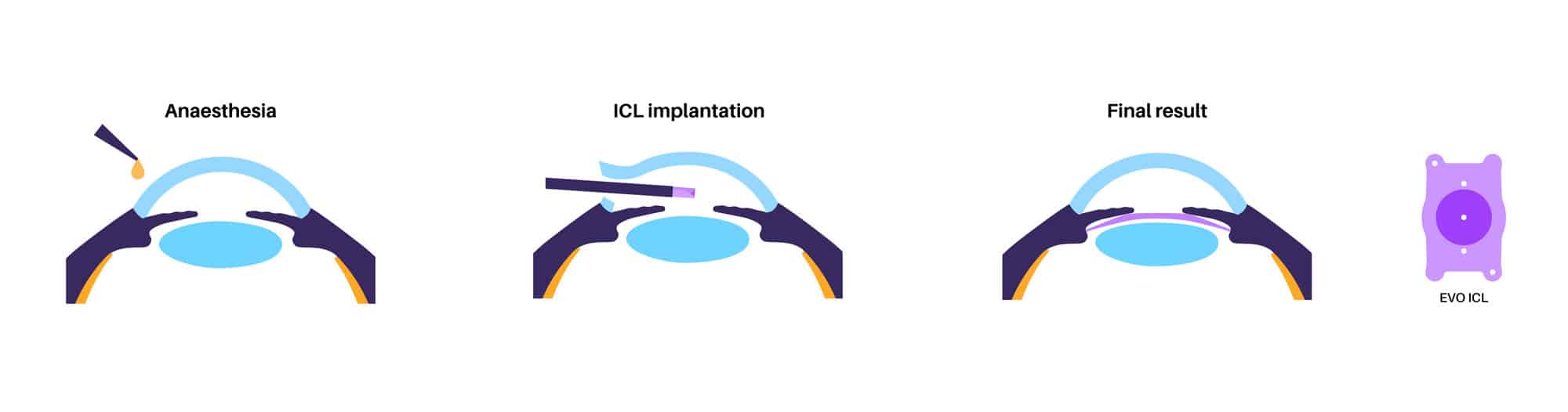
The incision is extremely small and typically seals without stitches. Because the procedure does not involve reshaping the cornea, many patients are surprised by how quick and comfortable the experience is. Most patients return home shortly after treatment.
What Is Recovery Like After EVO ICL?
Recovery after EVO ICL is typically faster than many patients expect. Many individuals notice visual improvement within the first day, although vision may continue stabilizing during the early healing period.
Some patients experience:
- Mild blurry vision
- Halos around lights
- Light sensitivity
- Mild irritation or awareness of the eye
These symptoms are usually temporary and improve as healing progresses. Most patients can return to many normal activities within a few days, although your surgeon will provide individualized guidance regarding work, exercise, and other activities. Following your prescribed medication schedule and attending follow-up appointments are important parts of the recovery process.

How Long Does EVO ICL Last?
EVO ICL is designed to provide long-term vision correction. The implanted lens does not wear out and is intended to remain in place indefinitely. Because the procedure corrects refractive error, many patients enjoy years of reduced dependence on glasses and contact lenses.
However, EVO ICL cannot prevent normal age-related changes inside the eye. After age 40, many people develop presbyopia, which affects near vision. Later in life, cataracts may develop as part of the natural aging process. Typically, these changes occur whether or not a patient has undergone EVO ICL.
Is EVO ICL Safe?
EVO ICL has undergone extensive clinical evaluation and received FDA approval after demonstrating strong safety and effectiveness.
Like any surgical procedure, EVO ICL carries potential risks and complications. However, serious complications are uncommon when appropriate candidates are carefully selected and the procedure is performed by experienced surgeons.
At CLEI, patient safety begins with a comprehensive evaluation and detailed measurements of the eye. This allows us to determine whether EVO ICL is appropriate and to customize treatment planning for each patient.
Understanding both the benefits and limitations of the procedure is an important part of the decision-making process.
Why Choose CLEI for EVO ICL in New Jersey?
Choosing a vision correction procedure is an important decision, and surgeon experience matters.
At CLEI, our refractive surgery team offers advanced diagnostic testing and a personalized approach to treatment planning. We evaluate every patient’s eyes carefully and recommend procedures based on individual needs rather than a one-size-fits-all approach.
Whether EVO ICL, LASIK, PRK, or another vision correction procedure is ultimately recommended, our goal is to help you make an informed decision with confidence.
We believe education, transparency, and individualized care are essential parts of achieving the best possible outcomes.

Surgeon Profile: Dr. Greenstein
Why Patients Trust the Team at CLEI
Harvard-Trained, Fellowship-Certified Expertise
Dr. Steven Greenstein completed his Cornea, Refractive & External Disease fellowship at Massachusetts Eye and Ear after graduating from Harvard Medical School. This advanced training focused specifically on corneal disease, laser vision correction, and complex refractive surgery, providing the specialized expertise needed to evaluate and treat a wide range of vision correction patients.
More Than 10,000 Vision Correction Procedures
With more than two decades of experience and over 10,000 successful procedures performed, Dr. Greenstein has helped thousands of patients reduce their dependence on glasses and contact lenses. That depth of experience allows him to make highly individualized treatment recommendations and gives patients confidence that their care is guided by years of surgical expertise and proven outcomes.
A Personalized Approach to Vision Correction
Not every patient is a candidate for the same procedure. Dr. Greenstein’s approach begins with a comprehensive evaluation designed to determine whether EVO ICL, LASIK, PRK, or another treatment is the best fit for each patient’s eyes, lifestyle, and long-term visual goals. His focus is on helping patients make informed decisions and achieve the safest, most effective outcome possible.
What Patients are Saying
“Dr. Greenstein performed an EVO ICL surgery in both my eyes. The short of it is that I’m ecstatic with the results (20/20 distance vision from my right eye and 20/20 near/reading vision from my left). Little to no nighttime halo, no pain, quick recovery (I could function well the very next day, although it took a couple of weeks for the vision to fully settle in). Dr. Greenstein is a highly respected surgeon who is recognized as among the best in his field, but he also genuinely cares for his patients and made me feel comfortable throughout the entire process. Answered all of my questions thoroughly and went over pre and post op expectations multiple times so I was completely educated in what I was signing up for. Everyone in his office staff is so friendly and helpful and genuinely kind. They’re willing to do everything to make all of the administrative and procedural steps as easy for you as possible. I look forward to seeing them when I go for my post-op checkups. All of the nurses are highly trained professionals and they [use] advanced equipment for testing and measuring your eyes. For my pre-op measurements, I went through about 10 different machines – very extensive & thorough. Shout out to Dr. Gelles as well, who dialed in what my EVO prescriptions should be. I really enjoyed my interactions with him.” – St Gh (Google Review)
Frequently Asked Questions About EVO ICL
What is EVO ICL?
EVO ICL is an implantable lens that corrects nearsightedness and certain forms of astigmatism. The lens is placed inside the eye behind the iris and works alongside the eye’s natural lens.
Can you feel the EVO ICL lens?
No. Once the lens is positioned inside the eye, patients typically cannot feel it.
Is EVO ICL permanent?
The lens is intended to remain in place long term. However, unlike laser vision correction, the lens can be removed or exchanged if medically necessary.
How long does EVO ICL recovery take?
Many patients notice significant visual improvement within one to several days. Vision generally continues stabilizing during the healing process over the following weeks.
Does EVO ICL help with dry eyes?
Because EVO ICL does not reshape the cornea, it may be an attractive option for some patients with dry eye concerns. During your consultation, your surgeon can discuss whether this may be beneficial in your specific case.
Can EVO ICL treat high prescriptions?
Yes. One of the advantages of EVO ICL is its ability to treat moderate to high levels of nearsightedness that may exceed the treatment range of some laser procedures.
How much does EVO ICL cost?
The cost of EVO ICL varies depending on your eyes, treatment plan, and individual circumstances. During your consultation, we will discuss candidacy, financing options, and pricing so you understand what to expect.
Find Out If EVO ICL Is Right for You
If you’re considering EVO ICL in New Jersey, the first step is a comprehensive consultation.
At CLEI, our experienced refractive surgeons will evaluate your eyes, answer your questions, and help determine whether EVO ICL, LASIK, PRK, or another vision correction procedure may be the best fit for your goals.



