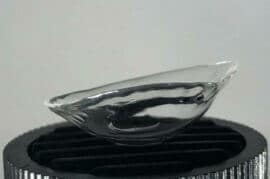
Introduction to Wavefront Guided Scleral Lenses For patients with complex corneas, such as keratoconus, pellucid marginal degeneration, ectasia, corneal transplants, after LASIK, and more, scleral lenses are lifesavers! They can provide comfort and improved vision when all other contact lens options have failed. However, for some patients, even those with 20/20 vision, the quality of […]
Read More
Posted by John Gelles on March 12, 2024
If you have been diagnosed with keratoconus, learning about your treatment options can quickly become overwhelming. You may hear about corneal cross-linking, CTAK, specialized contact lenses, and procedures such as DALK or full-thickness corneal transplantation. How do you know which one you actually need? The answer depends on what your cornea needs. Different keratoconus treatments […]
Read More
Posted by Steven Greenstein on September 11, 2026
Keratoconus is an irregular condition by nature. As the cornea weakens, it does not typically change in a perfectly even or symmetrical way. Instead, certain areas may become steeper, thinner, or more distorted than others. That raises an important question when treating the condition: Should every part of an irregular cornea receive exactly the same […]
Read More
Posted by Steven Greenstein on September 11, 2026
When it comes to sports performance, vision matters. Whether you’re tracking a fast-moving ball or reacting to an opponent’s next move, clear vision plays a major role in how well you perform. Visual acuity, depth perception, peripheral awareness, and reaction time all work together to support athletic success. But for athletes who rely on glasses […]
Read More
Posted by John Gelles on July 13, 2026
One of the biggest questions people ask before having LASIK is, “Will the results last?” It’s a fair question. After all, if you’re investing in laser vision correction, you want to know whether you’ll still be enjoying clear vision 10, 20, or even 30 years from now. The reassuring news is that LASIK permanently reshapes […]
Read More
Posted by Steven Greenstein on June 29, 2026
When Is a Corneal Transplant Needed? Many patients with keratoconus can successfully manage their condition with treatments such as corneal cross-linking, specialty contact lenses, CTAK, or other vision-correcting procedures. However, there are situations where these treatments are no longer enough. As keratoconus progresses, the cornea can become severely distorted, significantly affecting vision and quality of […]
Read More
Posted by Steven Greenstein on June 23, 2026
The Question Everyone Is Really Asking If you’ve ever considered LASIK, you’ve probably had the same thought as countless other patients: “Is LASIK really worth it?” For many people, the hesitation isn’t about the procedure itself. It’s about the cost. LASIK is an elective procedure, which means it is typically not covered by insurance. When […]
Read More
Posted by Steven Greenstein on June 17, 2026
Not Everyone Needs a Full Corneal Transplant For patients with keratoconus or other irregular corneal conditions, it can sometimes feel like there are only two options: continue relying on specialty contact lenses or eventually undergo a corneal transplant. The reality is often more nuanced. Many patients fall somewhere in the middle. Their corneas are irregular […]
Read More
Posted by Steven Greenstein on June 12, 2026
For many people, contact lenses start out feeling like freedom. Freedom from glasses sliding down your nose. Freedom from fogged lenses in humid weather. Freedom to play sports, dress up, or simply see clearly without frames getting in the way. For years, contacts may feel easy and convenient. You put them in, go about your […]
Read More
Posted by Steven Greenstein on June 2, 2026
Many people who had LASIK years ago are now reaching the age when cataracts naturally begin to develop. One of the most common questions they ask is whether previous LASIK surgery will affect their cataract surgery results. The good news is yes — you can absolutely have cataract surgery after LASIK. In fact, it is […]
Read More
Posted by Steven Greenstein on May 13, 2026
Keratoconus and cataracts can each have a major impact on vision individually. When they occur together, patients often find themselves dealing with a combination of blurry vision, distortion, glare, and reduced visual quality that becomes increasingly difficult to manage. Keratoconus affects the shape of the cornea, while cataracts affect the clarity of the eye’s natural […]
Read More
Posted by Steven Greenstein on May 6, 2026